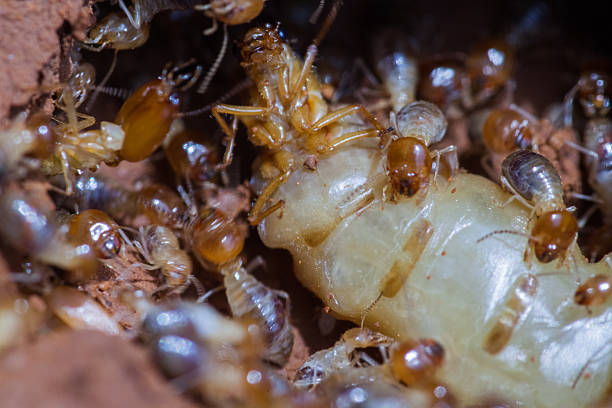
Termites exhibit highly sophisticated social behaviour, facilitated by a range of communication methods essential for colony coordination and survival. The primary mechanisms include:
1. Pheromone Release
Termites rely extensively on pheromones chemical signals emitted by individuals to influence the behaviour and physiology of others within the colony. These pheromones serve various functions, such as:
2. Trophallaxis (Food Sharing)
Trophallaxis is the mutual exchange of food and fluids, including saliva, among colony members. This behaviour:
3. Vibrational Communication
Termites also use substrate-borne vibrations to convey information. These signals are typically produced by head-banging or body movements and are used to:
✨ Conclusion
Modern pest control solutions exploit termite communication systems to achieve effective colony control. Unlike traditional contact-based pesticides, most advanced formulations do not kill termites immediately; instead, they infect the initial host, and this infection is subsequently transmitted throughout the colony ultimately reaching the queen and ensuring complete eradication.